Water quality plays an important role in industrial operations. Whether water is used for manufacturing, processing, boilers, cooling systems or cleaning, untreated water can affect equipment performance and production quality.
An Industrial Reverse Osmosis (RO) Plant provides a practical solution by reducing dissolved salts, hardness and other impurities through a semi-permeable membrane system.
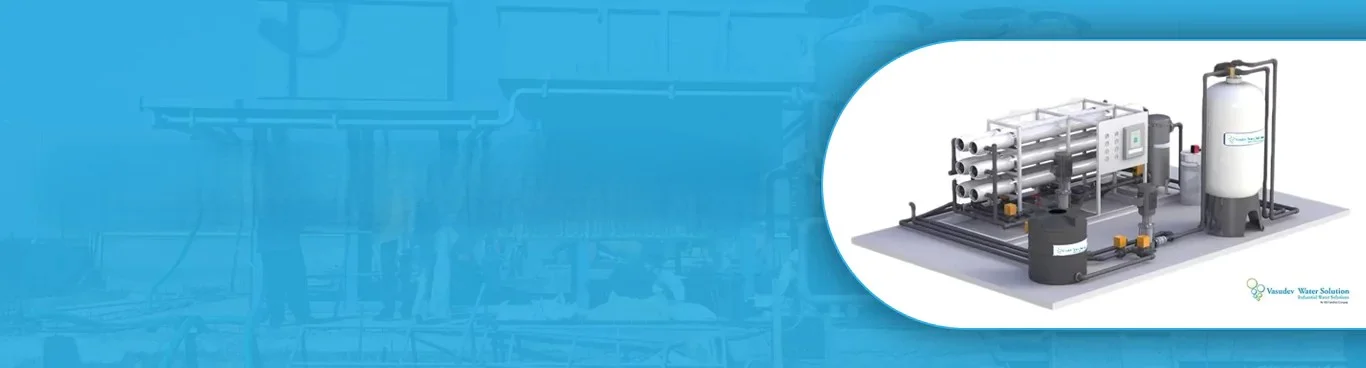
An Industrial RO Plant is a water treatment system designed to produce treated water in the quantity and quality required by commercial and industrial facilities.
In the RO process, feed water is passed through membranes under pressure. The membranes allow treated water, known as permeate, to pass through while concentrating dissolved salts and other rejected substances in the reject stream.
The system can be designed for different water sources, including borewell, brackish and other industrial water applications.
The right RO plant depends on the water and the application. Key design factors include:
TDS, hardness, pH, turbidity, temperature and other parameters need to be evaluated before designing the system.
The required capacity depends on daily water consumption, operating hours and the amount of treated water required.
Depending on the water quality, pretreatment may include pressure sand filters, activated carbon filters, softeners, antiscalant dosing and cartridge filters.
Membrane type and configuration are selected according to the feed-water characteristics and required treated-water quality.
RO recovery determines how much of the feed water becomes treated water. The recovery level needs to be balanced with scaling and fouling considerations.
Industrial RO systems are used across a wide range of sectors, including:
The required RO configuration can vary significantly between industries because each application has different water-quality requirements.
Choosing an RO plant only on the basis of capacity or price can lead to operational problems later.
A properly designed system considers feed-water quality, pretreatment, membrane configuration, recovery, automation and the final application. This helps the plant deliver consistent treated water and supports efficient operation.
For example, an RO system treating high-TDS borewell water may require a different configuration from one treating relatively low-TDS water for a commercial facility.
Established in 2008, Vasudev Water Solution is an ISO 9001:2008 certified water technology company providing water treatment solution for domestic, commercial and industrial requirements. The company works with customers including municipalities, water bottlers, hotels and resorts, farmers and industries such as chemical and pharmaceutical companies.
Vasudev Water Solution designs and supplies customised Industrial RO Plants for different water-treatment requirements, with systems available across a wide range of capacities and configurations.
Learn about TDS, hardness, pH, turbidity, alkalinity and other parameters that influence RO performance.
Understand membrane separation, pressure, permeate, reject, recovery and common causes of membrane fouling.
Know why sand filters, activated carbon filters, softeners, cartridge filters and antiscalant systems are used before RO.
Study how RO systems are designed differently for pharmaceutical, chemical, food, textile and other industries.
Regular water analysis helps identify changes in TDS, hardness and other parameters that can affect RO performance.
Effective pretreatment protects RO membranes from scaling, fouling and suspended particles, helping maintain consistent performance.
Keep track of pressure, flow, recovery, permeate quality and reject levels to identify performance changes early.
Regular membrane cleaning, filter replacement and system inspections can help maintain treated-water quality and extend equipment life.
An Industrial RO Plant is a water treatment system that uses pressure and RO membranes to reduce dissolved salts and impurities from water.
It is designed according to feed-water quality, required capacity, treated-water quality, pretreatment requirements and desired recovery.
They are used in pharmaceutical, chemical, textile, food and beverage, dairy, power, hospitality and other industries.
Depending on the feed-water quality, pretreatment may include sand filtration, activated carbon filtration, softening, antiscalant dosing and cartridge filtration.
Capacity should be based on daily water demand, peak consumption, operating hours and the quantity of treated water required.